Every year, billions of worn-out tires are discarded worldwide, posing a severe environmental threat. These non-biodegradable wastes occupy landfills, release toxic substances when incinerated, and even become breeding grounds for mosquitoes if left untreated. However, amid this challenge lies an opportunity to turn waste into wealth—through tire pyrolysis, a technology that is reshaping the future of waste tire management and boosting the circular economy.
What is Tire Pyrolysis?
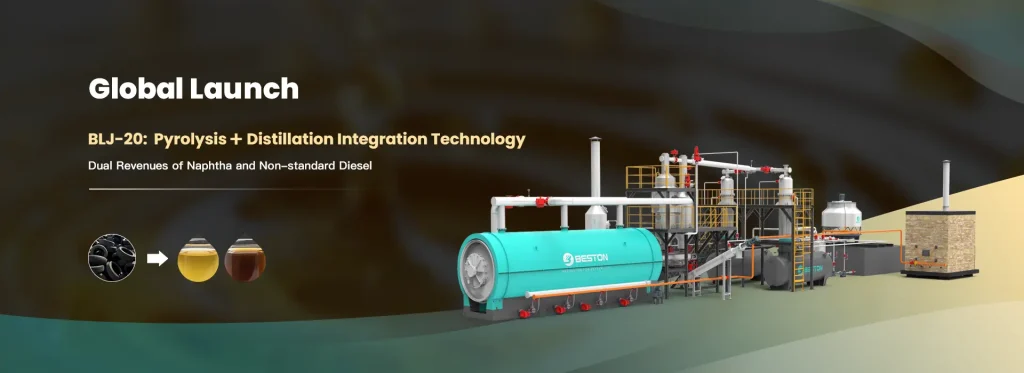
Tire pyrolysis is a thermal decomposition process that breaks down waste tires into valuable products in the absence of oxygen. Under high temperatures (typically 400-600°C), the complex polymers in tires—such as natural rubber, synthetic rubber, and carbon black—are cracked into smaller molecules. The end products of this process are highly versatile: pyrolysis oil, carbon black, steel wire, and non-condensable gas (syngas). Each of these products can be reused or recycled, creating a closed-loop system that minimizes waste and maximizes resource efficiency.
How Tire Pyrolysis Drives the Circular Economy
The circular economy aims to eliminate waste by keeping resources in use for as long as possible, extracting maximum value from them, and then recovering and regenerating products and materials at the end of their life cycle. Tire pyrolysis machine aligns perfectly with this vision, transforming a problematic waste stream into a source of renewable resources.
First, pyrolysis oil is a key product with broad applications. It can be refined into diesel fuel, gasoline, or heavy fuel oil, which can power vehicles, generators, and industrial boilers. Unlike fossil fuels, this oil is derived from waste, reducing reliance on non-renewable resources and lowering carbon emissions. Some advanced refineries even convert pyrolysis oil into petrochemical feedstocks, used to produce new plastics, rubbers, and other materials—closing the loop for polymer production.
Second, recovered carbon black (RCB) from pyrolysis is a cost-effective alternative to virgin carbon black, which is traditionally made from petroleum. RCB can be used in manufacturing new tires, rubber products, plastics, inks, and even as a soil amendment. By replacing virgin carbon black with RCB, industries reduce their carbon footprint and conserve petroleum resources.
Third, the steel wire extracted from waste tires during pyrolysis is 100% recyclable. It can be melted down and reused to produce new steel products, such as construction materials or automotive parts, reducing the energy consumption and emissions associated with mining and processing raw iron ore.
Finally, the syngas generated during pyrolysis—composed of methane, hydrogen, and carbon monoxide—can be used as a fuel to heat the pyrolysis reactor itself, making the process self-sustaining and reducing external energy input. Any excess syngas can be used to generate electricity, further enhancing the energy efficiency of the entire system.
Environmental and Economic Benefits
Beyond its role in the circular economy, tire pyrolysis offers significant environmental and economic advantages. Environmentally, it diverts waste tires from landfills and incinerators, reducing soil, water, and air pollution. Unlike incineration, pyrolysis does not release harmful pollutants like dioxins and furans, as the oxygen-free environment prevents their formation. Additionally, by replacing fossil fuels with pyrolysis-derived products, it helps reduce greenhouse gas emissions and mitigate climate change.
Economically, tire pyrolysis creates a new revenue stream from waste. For waste management companies, it turns a costly disposal problem into a profitable business. For industries, it provides affordable, sustainable alternatives to virgin materials, lowering production costs. Moreover, the technology stimulates job creation—from tire collection and sorting to pyrolysis plant operation and product refining—boosting local economies.
Conclusion
Waste tires no longer need to be a burden on the environment—they can be a valuable resource. Tire pyrolysis is a game-changer in the transition to a circular economy, turning waste into energy, materials, and profits. By embracing this technology, we can reduce our reliance on fossil fuels, minimize waste, and build a more sustainable future for generations to come. The journey towards a circular economy is long, but tire pyrolysis proves that waste can indeed be the new wealth.
Leave a Reply