Every year, the world generates over 1.5 billion end-of-life tires—a massive environmental challenge and a colossal, untapped reservoir of energy and materials. Traditional disposal methods like landfilling and inefficient incineration are increasingly unsustainable. Enter tyre pyrolysis, an advanced chemical recycling process that is not just managing waste but actively reconfiguring our approach to resources and energy. This technology is transforming a global liability into a source of industrial feedstock and fuel, offering a blueprint for a circular economy in action.
From Waste to Wealth: The Core Process
Tyre pyrolysis thermally decomposes rubber in an oxygen-free environment, breaking it down into its constituent parts:
- Pyrolysis Oil (45-55%): A liquid fuel comparable to industrial diesel, usable in boilers, furnaces, or for further refinement.
- Carbon Black (30-35%): A critical reinforcing agent in tire and rubber manufacturing. Recovered carbon black (rCB) can partially replace virgin carbon black, which is traditionally made from fossil fuels.
- Steel Wire (10-15%): Clean steel ready for recycling in foundries.
- Syngas (5-10%): Non-condensable gases used to power the pyrolysis process itself, enhancing energy efficiency.
Redefining the Energy System: Decentralized and Circular Fuels
Fossil Fuel Displacement: The primary product, tyre pyrolysis oil, serves as a direct substitute for conventional heavy fuels in industrial heating, reducing reliance on fossil fuels and offering a transitional, lower-carbon energy source.
- Energy Security & Decentralization: A local tyre pyrolysis plant can process regional waste into valuable energy, reducing dependency on imported fuels and creating a more resilient, decentralized energy model. It turns a local waste problem into a local energy solution.
- Closing the Carbon Loop: While the oil’s combustion releases CO₂, it utilizes carbon already in the economic system (the tire), differing from extracting and burning new fossil carbon. When integrated with renewable energy to power the plant, its carbon footprint can be further reduced.
Revolutionizing Resource Utilization: The “Urban Mine”
- Circular Manufacturing for Tires: The most profound impact is on resource cycles. Recovered Carbon Black (rCB) is reintegrated into new tire or rubber products, directly closing the material loop. This reduces the need for virgin carbon black production, a highly energy-intensive process derived from petroleum or coal tar.
- Conserving Virgin Resources: Every ton of rCB used prevents approximately 3 tons of CO₂ emissions from virgin production and conserves valuable feedstocks. The recycled steel further reduces the need for iron ore mining and processing.
- Creating New Supply Chains: The outputs create entirely new, circular markets—for rCB in plastics, inks, and coatings; for pyrolysis oil in industrial energy; and for the syngas in on-site process heating.
The Engine of Change: The Modern Tyre Pyrolysis Plant
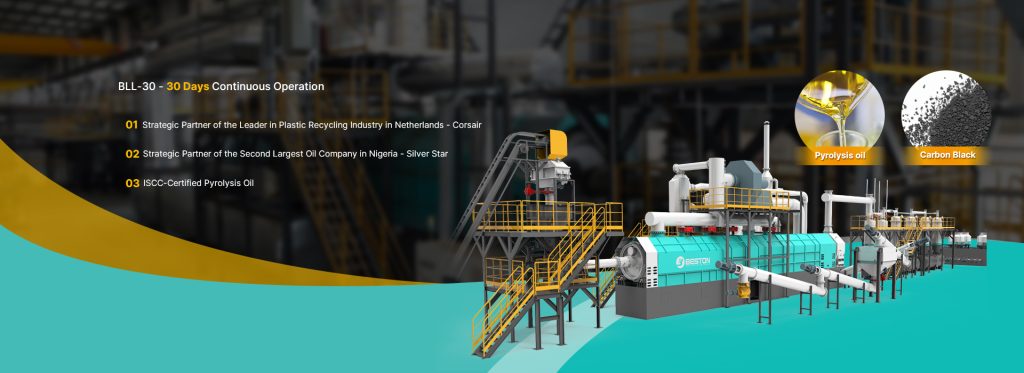
The viability of this transformation hinges on advanced, environmentally sound technology. A modern tyre pyrolysis plant is a far cry from simple batch reactors. Contemporary systems are often continuous or semi-continuous, featuring automated feeding, precise temperature control, and advanced emission treatment systems like condensers and gas scrubbers. This ensures operational efficiency, maximizes product yield and quality, and, crucially, meets strict environmental standards. The strategic deployment of these plants, whether as regional hubs or integrated into larger waste management facilities, is key to scaling this resource revolution.
Conclusion
Tyre pyrolysis is more than a waste treatment technology; it is a systemic innovator. It actively reconfigures linear “take-make-dispose” chains into circular loops, turning end-of-life tires from an environmental burden into a strategic resource for both energy and manufacturing. By displacing fossil fuels and virgin materials, a well-operated tyre pyrolysis plant becomes a node in a more sustainable industrial ecosystem. As the world prioritizes circularity and carbon reduction, this technology offers a tangible, proven pathway to extract value from waste, reduce our extractive footprint, and build a more resilient resource foundation for the future.
Leave a Reply