As the global demand for clean and renewable energy grows, agricultural residues pyrolysis recycling has become an innovative and eco-friendly solution. Every year, millions of tons of rice straw, corn stalks, and other crop residues are burned or discarded, releasing harmful gases and wasting valuable biomass resources.
With modern technology such as the straw charcoal making machine, these agricultural wastes can now be transformed into rice straw charcoal—a clean fuel and a valuable product for both energy and agriculture.
What Is Agricultural Residues Pyrolysis Recycling?
Pyrolysis is a process that uses high temperatures in the absence of oxygen to decompose organic materials like straw, husks, or wood chips into charcoal, tar, and syngas.
When applied to agricultural residues, this technology allows farmers and entrepreneurs to recycle waste into energy, reduce pollution, and even earn extra income.
In simple terms, agricultural residues pyrolysis recycling turns waste into wealth.
From Rice Straw to Charcoal — The Process Explained
Rice straw is one of the most abundant agricultural wastes in the world. Unfortunately, much of it is openly burned, causing severe air pollution. The straw charcoal making machine offers a sustainable alternative through these steps:
- Collect and Dry Straw: Moisture content is reduced to improve efficiency.
- Crushing and Feeding: Dried straw is shredded and fed into the pyrolysis reactor.
- Carbonization (Pyrolysis): At 400–600°C, the straw decomposes into charcoal and combustible gas.
- Cooling and Discharging: The finished rice straw charcoal is cooled and ready for packaging or further processing.
This process not only produces charcoal but also captures useful by-products such as biogas and wood vinegar, which can be used for heating or as agricultural inputs.
The Straw Charcoal Making Machine — Key Equipment for Rice Straw Recycling
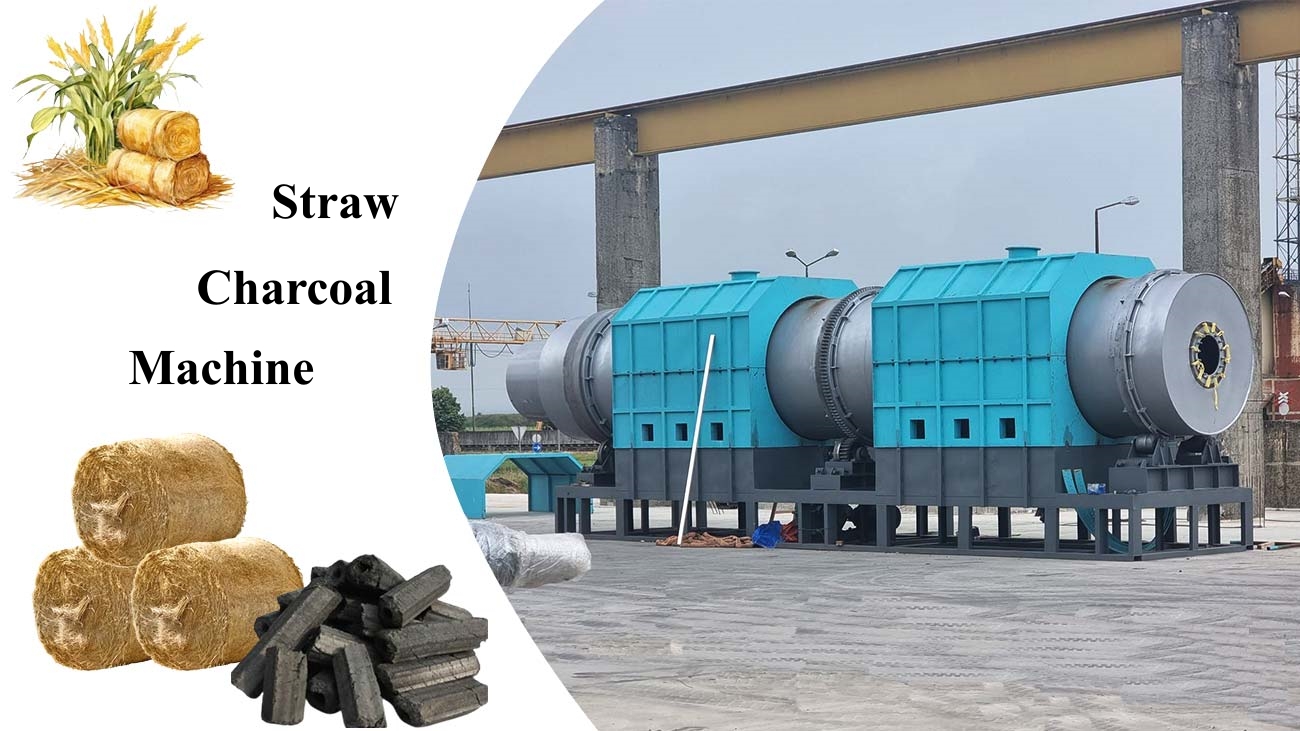
A straw charcoal making machine (also called a biomass carbonization machine) is the core equipment in agricultural residues recycling.
Main features:
- Continuous or batch operation options
- Energy-efficient heating system (reuses combustible gas)
- PLC control for stable and safe operation
- Compatible with rice straw, corn stalks, sawdust, and other crop residues
With this technology, rice straw recycling becomes an efficient and profitable process, transforming waste into marketable biochar.
Benefits of Rice Straw Recycling and Pyrolysis
- Environmental Protection: Prevents open burning and reduces CO₂ and PM2.5 emissions.
- Renewable Energy Source: Produces clean-burning charcoal for BBQs, heating, and industry.
- Soil Improvement: Rice straw charcoal (biochar) enhances soil fertility and water retention.
- Economic Opportunity: Creates income for farmers and rural entrepreneurs.
By investing in straw charcoal making machines, agricultural communities can promote sustainability while developing a circular bioeconomy.
Market Outlook — Why Invest in Straw Charcoal Production?
The global demand for biomass charcoal is rising rapidly due to clean energy policies and consumer awareness.
Countries in Asia, Africa, and Europe are encouraging rice straw recycling projects to reduce pollution and utilize agricultural residues effectively.
Whether you’re a small farmer or an industrial investor, setting up a rice straw charcoal production line offers strong potential for long-term profit and environmental impact.
Conclusion
Agricultural residues pyrolysis recycling is not just a technological innovation—it’s a sustainable business model for the future.
By using a straw charcoal making machine, we can convert agricultural waste into valuable rice straw charcoal, reduce emissions, and create new economic opportunities for rural communities.
Turning straw into energy is more than recycling—it’s reshaping the future of green agriculture.
Leave a Reply