In the global pursuit of sustainable energy and waste reduction, charcoal remains a vital resource—used in agriculture, industry, and households. However, the traditional charcoal production process is often inefficient, polluting, and limited to specific raw materials. Today, modern charcoal production machines are revolutionizing the industry by accepting a wide range of biomass feedstocks, turning waste into value while boosting sustainability. This versatility not only addresses waste management challenges but also makes charcoal production more accessible and cost-effective worldwide.
The Critical Role of Biomass Versatility in Charcoal Production
Biomass, the organic matter derived from plants and animals, is the lifeblood of charcoal production. Historically, charcoal makers relied heavily on hardwoods, leading to deforestation and ecosystem degradation in many regions. Moreover, this reliance on a single feedstock made production vulnerable to supply shortages and price fluctuations. Modern charcoal production machines solve these issues by accommodating diverse biomass types, transforming agricultural residues, forest by-products, and even municipal organic waste into high-quality charcoal. This shift not only reduces pressure on natural forests but also taps into the enormous potential of underutilized waste streams.
The versatility of these machines is rooted in advanced design features, such as adjustable pyrolysis temperatures, modular feed systems, and adaptive crushing mechanisms. Unlike traditional kilns that require uniform, dense hardwood, modern equipment can process materials of varying sizes, densities, and moisture contents. This flexibility allows producers to source feedstock locally, cutting transportation costs and reducing carbon footprints. For example, a farmer in Southeast Asia can use rice husks, while a forest manager in Europe can utilize sawdust, and both can produce high-grade charcoal with the same machine.
A Closer Look at Acceptable Biomass Types
Modern charcoal production machine is engineered to handle an impressive array of biomass feedstocks, categorized into several key groups. Agricultural residues top the list, as they are abundant, low-cost, and often discarded as waste. These include rice husks, wheat straw, corn cobs, sugarcane bagasse, and coconut shells. Coconut shells, in particular, are highly valued for producing activated charcoal due to their high carbon content, and modern machines can process them without pre-treatment beyond crushing.
Forest and wood industry by-products are another major feedstock category. Sawdust, wood chips, bark, and logging residues—once considered waste—are now prime materials for charcoal production. These materials are already dry and have a consistent carbon content, making them easy to process. In addition, the machines can handle softwoods like pine and spruce, which were previously unsuitable for traditional charcoal making due to their high resin content. By converting these by-products into charcoal, the wood industry reduces landfill waste and creates an additional revenue stream.
Municipal and organic waste is a growing feedstock source, highlighting the machines’ role in circular economy systems. Food waste, garden clippings, and even sewage sludge (after proper treatment) can be processed into charcoal. While these materials require more pre-treatment—such as drying and pelletizing—modern machines integrate these steps into a seamless production line. For instance, in cities across Africa, community-led projects use charcoal production machines to convert food waste into charcoal, addressing both waste management and energy access issues.
The Advantages of Versatile Charcoal Production Machine
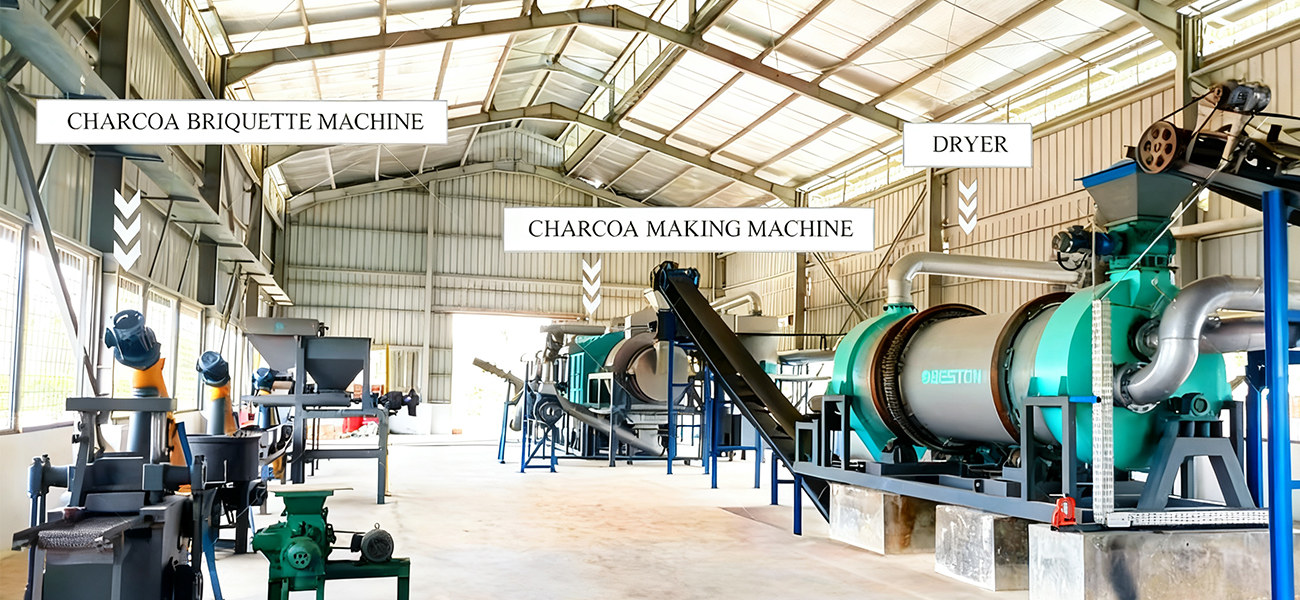
The ability to accept different biomass feedstocks brings multiple benefits to producers, communities, and the environment. Economically, it reduces feedstock costs and supply chain risks. Producers no longer need to compete for scarce hardwoods; instead, they can use local waste materials, lowering operational expenses. This accessibility empowers small-scale producers, such as farmers and rural entrepreneurs, to enter the charcoal market and generate income.
Environmentally, the versatility of these machines drives sustainability on multiple fronts. By using waste biomass, they reduce methane emissions from landfills—methane is a potent greenhouse gas with 28 times the warming potential of CO2 over 100 years. Additionally, replacing traditional hardwood-based charcoal production with waste-based production curbs deforestation and preserves biodiversity. The charcoal produced also sequesters carbon, making it a carbon-negative fuel when sourced from sustainable feedstocks.
Technologically, the demand for versatile feedstock handling has spurred innovation in machine design. Manufacturers are developing compact, mobile units suitable for rural areas, as well as large-scale industrial machines for urban waste management. Many machines now integrate energy recovery systems, using the heat generated during pyrolysis to power the production process or supply electricity to nearby communities. This circular energy model further enhances the sustainability of charcoal production.
Future Outlook: Expanding Versatility for a Greener World
As the world intensifies efforts to combat climate change and achieve carbon neutrality, versatile charcoal production machines will play an increasingly important role. Research and development are focused on expanding the range of acceptable feedstocks even further, including algae and aquatic plants. These emerging feedstocks have the potential to address water pollution while producing charcoal, creating a double environmental benefit.
Moreover, advancements in carbon capture and storage (CCS) technologies will complement these machines, allowing producers to sequester even more carbon from the production process. Governments and international organizations are also recognizing the potential of versatile charcoal production, offering subsidies and incentives for projects that use waste biomass. For example, the European Union’s Circular Economy Action Plan includes funding for biomass valorization projects, including charcoal production from waste.
In conclusion, charcoal production machines that accept different biomass feedstocks are more than just industrial equipment—they are tools for sustainable development. By turning waste into value, reducing deforestation, and empowering local communities, these machines are reshaping the charcoal industry. As technology continues to advance, their versatility will only grow, making them a cornerstone of the global transition to a circular, low-carbon economy.
Leave a Reply