When world leaders gather for COP summits, most of the attention falls on fossil fuels, renewable energy, and carbon markets. Yet one of the most powerful — and underappreciated — tools for carbon sequestration remains largely in the shadows: biochar.
Biochar, a charcoal-like substance produced by heating organic biomass in a low-oxygen environment, is gaining traction in regenerative agriculture and climate mitigation. It’s not just a soil amendment — it’s a long-term carbon sink that could help slow the planet’s warming.
A Proven Carbon Sink
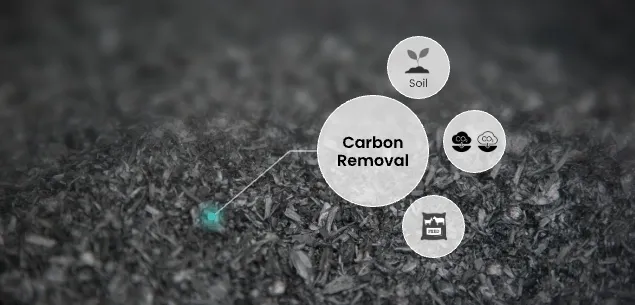
Unlike compost, which eventually decomposes and releases CO₂ back into the atmosphere, biochar is stable for hundreds or even thousands of years. This means that when it’s buried in soil, it locks carbon away almost permanently.
Scaling up this process globally could remove gigatons of CO₂ from the atmosphere annually. But for that to happen, we need to shift our focus at high-level climate discussions like COP. Biochar deserves a seat at the table alongside wind, solar, and reforestation.
Beyond the Farm: Biochar’s Versatile Potential
Many see biochar as a niche agricultural tool, but its applications are expanding fast. From wastewater treatment and concrete additives to livestock feed and urban landscaping, biochar is showing up in unexpected places. Cities are even experimenting with incorporating it into green infrastructure to combat urban heat islands.
Interestingly, these innovations all start with one key technology: the biochar making machine. While the science of biochar is centuries old — tracing back to the Amazonian Terra Preta — modern machines have made the process more efficient, cleaner, and scalable than ever before.
Why COP Should Pay Attention
So, why hasn’t biochar taken center stage at COP conferences?
Part of the problem is visibility. Biochar lacks the drama of melting ice caps or massive solar farms. It’s a silent solution — buried underground, quietly storing carbon and restoring soil health. Yet the impact is no less profound.
Governments and NGOs are beginning to notice. Several countries have started to include biochar in their Nationally Determined Contributions (NDCs). In Kenya, smallholder farmers are turning agricultural waste into climate solutions using locally built biochar making machines, generating both income and resilience.
Another barrier is policy support. Biochar still exists in a grey zone in many carbon credit systems. A more standardized, science-based framework could unlock billions in funding and accelerate adoption.
Scaling the Climate Solution
If biochar is to live up to its climate potential, it must scale — and fast. That means making the production process accessible not just to industrial actors, but also to rural communities and emerging markets. Affordable, decentralized biochar making machines are a key part of this puzzle, enabling farmers to convert crop residues into both soil boosters and carbon assets.
COP needs to take note. In a world desperate for climate wins, biochar is one of the few tools that is cheap, scalable, and scientifically backed. It doesn’t demand massive new infrastructure or rare materials. All it needs is organic waste, basic technology, and forward-thinking policy.
Conclusion
Biochar may not be the flashiest climate solution — but it might just be one of the most powerful. If global climate talks are serious about achieving net-zero goals, then it’s time for biochar — and the humble biochar making machine — to step out of the shadows and into the climate spotlight.
Leave a Reply