In recent years, plastic waste has become a critical environmental concern. As landfills overflow and oceans suffer, the demand for sustainable plastic recycling solutions is growing rapidly. Among the emerging technologies, continuous plastic pyrolysis plants stand out for their ability to convert plastic waste into valuable resources like fuel oil, carbon black, and gas. Now, with enhanced automation, these systems are becoming even more efficient, safe, and cost-effective.
What is Continuous Plastic Pyrolysis?
Pyrolysis is a thermochemical process that breaks down plastic waste in the absence of oxygen. Unlike batch pyrolysis systems, continuous plastic pyrolysis plants operate non-stop, allowing for higher throughput and less manual intervention. Plastic waste is continuously fed into the reactor, and products are extracted in a streamlined flow.
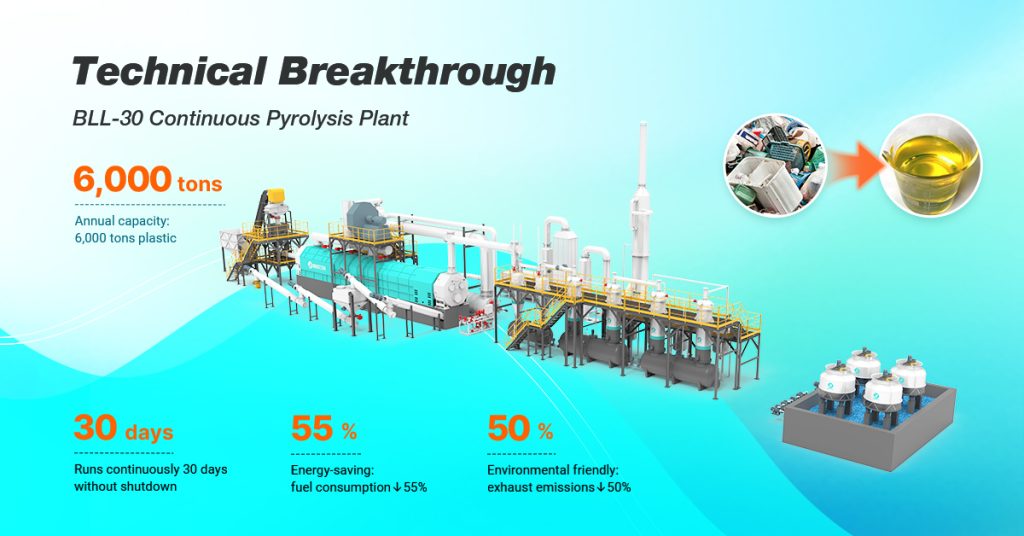
The Role of Automation
Automation is revolutionizing how pyrolysis plants operate. Here’s how enhanced automation improves the process:
1. Automated Feeding and Discharging
Modern systems use conveyor belts, shredders, and screw feeders to transport plastic waste directly into the reactor. Similarly, char and liquid products are automatically separated and collected, minimizing labor and exposure risks.
2. Real-Time Monitoring and Control
Sensors and advanced control systems constantly monitor temperature, pressure, and gas composition. Operators can use a central control panel or SCADA system to make precise adjustments, ensuring optimal pyrolysis conditions and maximum yield.
3. Energy Optimization
Automated systems help reuse the syngas generated during pyrolysis as a fuel source for the reactor, reducing external energy consumption. Smart energy management further enhances efficiency and lowers the carbon footprint.
4. Safety Enhancements
Automation helps detect anomalies such as pressure surges or temperature spikes in real time, triggering automatic shut-off or alarms. This drastically reduces the risk of accidents and ensures compliance with environmental and safety regulations.
Benefits of Enhanced Automation
- Increased Throughput: Continuous operation and minimal downtime.
- Lower Operating Costs: Reduced labor and energy costs.
- Consistent Product Quality: Precise control over reaction parameters.
- Greater Environmental Compliance: Lower emissions and safer waste handling.
- Scalability: Easier to expand or integrate into larger waste management systems.
The Future of Pyrolysis is Automated
As plastic waste continues to pose global challenges, continuous pyrolysis with enhanced automation offers a smart, scalable, and sustainable solution. With ongoing advancements in AI, IoT, and process engineering, the future of plastic recycling looks increasingly automated—and promising.
Leave a Reply